

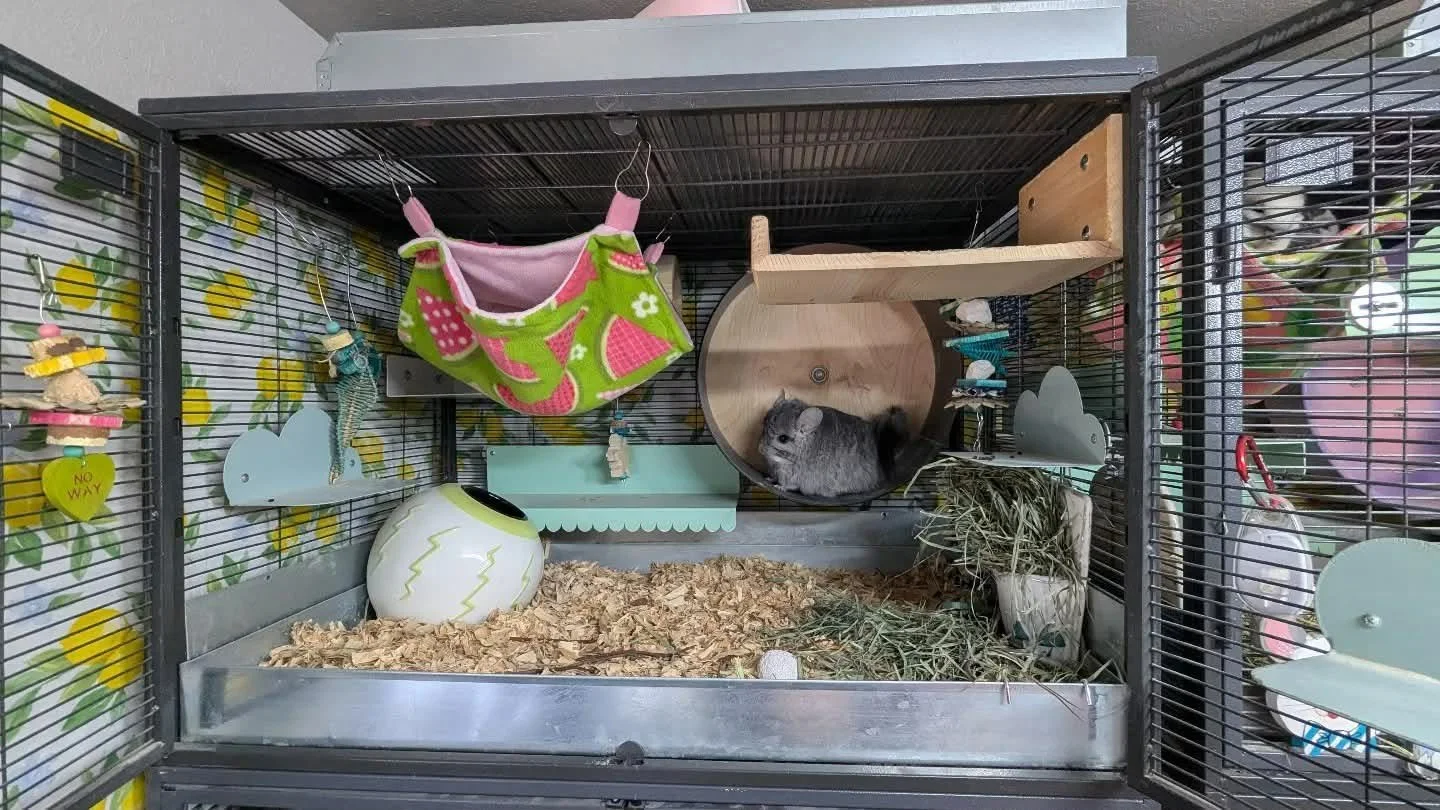
When choosing a chinchilla cage, it’s essential to prioritize functionality and durability over sheer size. In our experience, starting with a smaller enclosure that is properly set up is often far better than purchasing the largest cage available and leaving it bare. This is a common mistake new owners make. When an enclosure becomes difficult to maintain, owners can quickly feel overwhelmed by the upkeep, costs, and messes, sometimes leading to the disappointing decision to surrender their pet. This is preventable by establishing clear expectations.
If you prefer to start with a larger enclosure, it’s important to understand that doing so requires a significant upfront investment to set it up correctly. You should budget approximately $150–$300 for the cage itself, depending on size and whether it is purchased new or used, plus an additional $150 or more for essential supplies.
Chinchillas do not require massive enclosures to thrive. Once their basic needs are met, additional space is a bonus. While we absolutely encourage spoiling your pets, a well-designed, smaller condo-style cage can meet all of a chinchilla’s needs, keeping them clean, healthy, and happy. These cages often start around 25″ × 25″ × 25″, though wider designs are preferred.
Currently, there is no standardized minimum cage size for chinchillas in the United States, and other countries vary widely in their recommendations. Among chinchilla owners in online communities, one of the most popular setups is a Single Ferret Nation cage, measuring approximately 25″ high, 25″ deep, and 36″ long, which many owners successfully use for two to three chinchillas when properly furnished.
We want to be clear that we are not discouraging elaborate or creative enclosures. Rather, we encourage setting realistic goals that support both the animal and the owner. Starting with a manageable cage allows you to focus on creating a safe, enriching environment while you learn your chinchilla’s needs, setting both of you up for long-term success. There is always room to learn, grow, and upgrade.
We like to separate what a Chinchilla needs VS. what is considered a luxury item:
Needs to take a Chinchilla home:
A safe cage - All metal, or primarily metal with plastic ledges covered in washable fleece or replaced with wood.
Minimum size for 1-2 Chinchillas being: 25” x 25” x25” inches. The Preferred size is: 36” long, 25” deep, and 25” tall for 1-3 Chinchillas, and is a Ferret Nation or Critter Nation branded cage. This size is a “Single Unit”.
A food bowl - metal or ceramic: Tip, a parrot coop cup attaches to the cage wall and prevents waste.
A water bottle - Glass is best as plastic WILL be chewed. Mount your bottle outside the cage.
Bedding - Pine Shavings, Aspen Shavings, or Fleece Liners. ( No paper bedding or cedar )
Main Diet - Timothy Hay and High-quality Pellets with no added fillers. Plain Pellets.
Dusting Dish - Plastic if removed from cage, Glass or Ceramic if offered freely.
Dust for bathing - Brand does not matter, but look for Chinchilla DUST, not SAND.
Bonus items to enrich their lives:
A second unit or double unit Ferret Nation or Critter Nation cage. A double unit is still 36” long, 25” deep, but is two levels and 50” Tall, giving twice the amount of space to accommodate a spoiled single Chinchilla or a group as large as 6 comfortably. When sizing your enclosure, it’s best to prioritize width over height. Critter and Ferret Nation cages can be placed side by side with the walls removed and attached to create large, wide cages.
Metal pans for the cage ( Sold by Bass Equipment . Com )
Various Chew Toys - Wood, Pumice, Loofah, Vine, Willow. This promotes healthy teeth wear!
Ledges - Wooden, Metal, or Ceramic
Houses - Wood, Metal, or Ceramic
Fleece Cage Accessories - Hammocks, houses, cuddle cups, tunnels, cuddle buddies, etc
Chinchilla-safe treats - such as dried hibiscus flowers, Plain Cheerios, or fruit and veggie-free cookies.
Enclosed playpen for supervised playtime
14” or larger Chinchilla wheel ( Pet stores only sell wheels up to 12”, this item must be bought online )
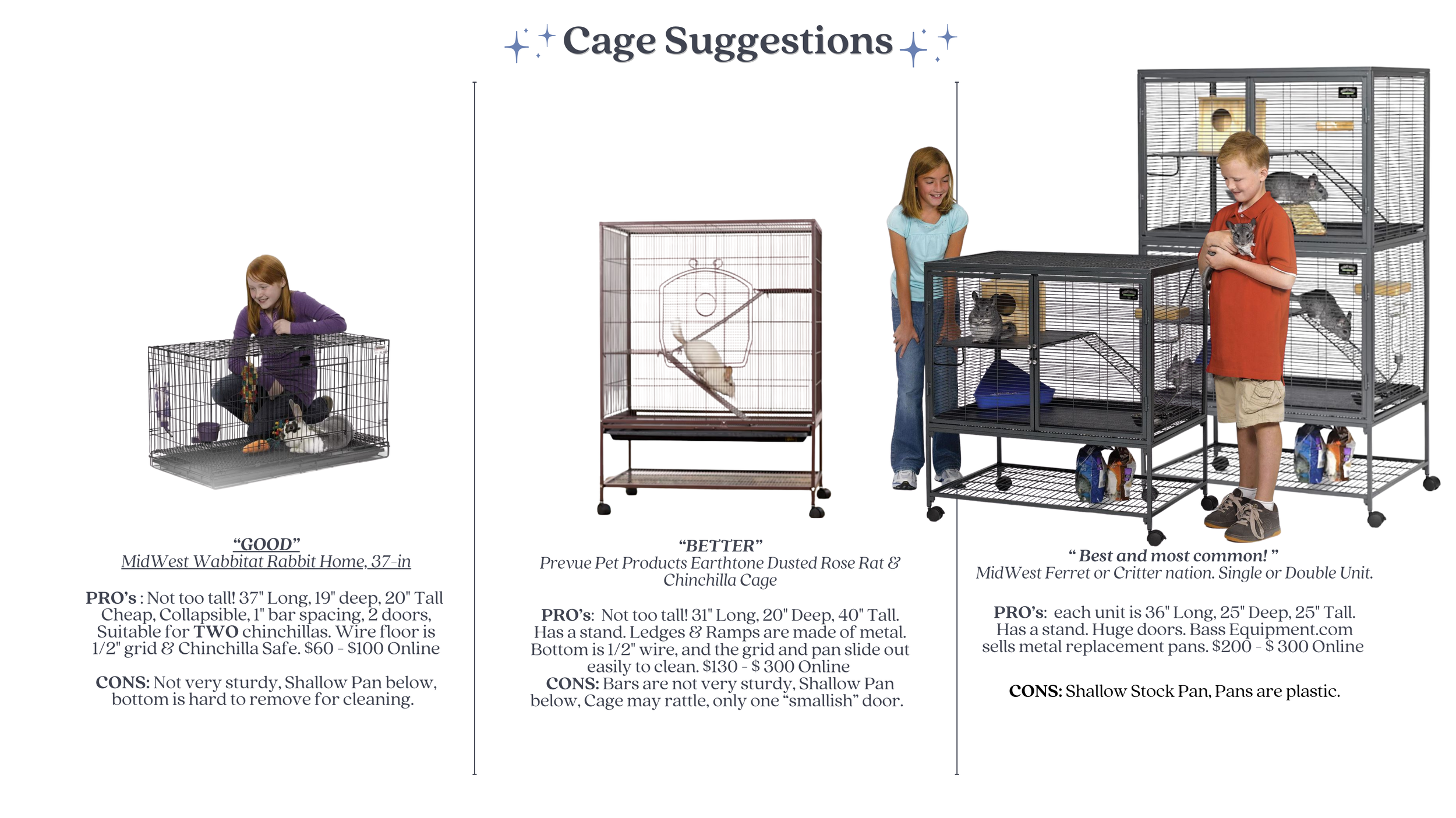
We do have several cages we recommend to pet owners. The cage you choose will depend on a few key factors: the number of animals you plan to keep, what you can realistically afford to set up and maintain, the space you have available, and where the cage will be located in your home.
Your cage should be positioned at least 3–4 inches away from walls and any surrounding furniture, cables, or curtains. Chinchillas will reach outside of their cage and attempt to chew on nearby items.
The cage should also be kept away from windows, vents, and drafts. Because chinchillas are highly sensitive to temperature changes, it’s essential to carefully monitor their environment and avoid warm sunlight or cold air blowing in through doorways or windows.
Before listing commercially available cages on the market, we want to address DIY cages. A DIY, or “do-it-yourself,” cage is one that you build yourself. While DIY cages can work for some species, they are not recommended for chinchillas unless you are able to construct a fully enclosed, durable metal enclosure.
Chinchillas will chew through wooden structures and thin metal wire with ease. Because of this, DIY cages made from common household materials are often unsafe and short-lived. Chinchillas are highly destructive chewers, and inadequate cage construction can lead to escapes, injuries, or ingestion of unsafe materials.
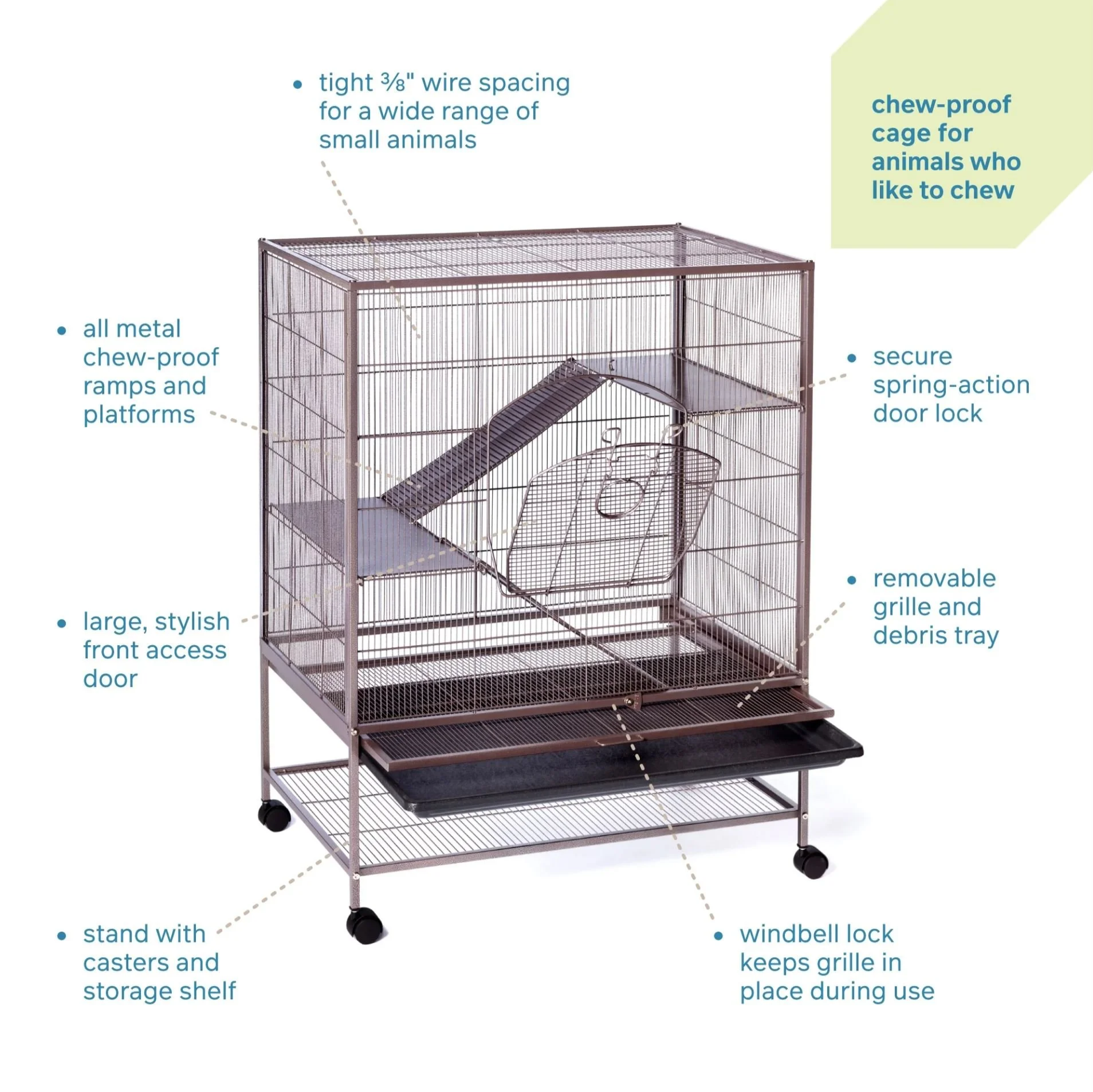
Our #1 Recommendation for those new to Chinchillas and on a budget is the Prevue Pet Products Earthtone Dusted Rose Rat & Chinchilla Cage. This cage is typically available for $200 through retailers such as Petco and Chewy.
This cage is ready to use straight out of the box and requires no modifications. The platforms and ramps are made of solid metal. The cage features a wire grate floor that slides out for easy cleaning, and the grate itself can be fully removed to clean thoroughly. Beneath the grate is a plastic pan, which is protected from chewing and wear by the metal flooring above.
Wire flooring is just as safe as any other bedding option when properly maintained and cleaned. Bumblefoot is caused by bacteria, not by the wire itself, and bacteria can accumulate on any surface if it is not kept clean.
This cage is best suited for 1-2 Chinchillas.
Our second recommendation is the Midwest Ferret Nation or Critter Nation cage. These cages are modular and available in single- or double-unit configurations, allowing you to customize the size to your needs. You can start with a single unit and later add a second or even a third level. It’s also possible to remove side walls to create a double-wide enclosure.
We highly recommend these cages—they are among the most commonly used within the chinchilla community and are the same cages we use for our own pets and rescue animals.
Pricing varies widely. Used units are often available for approximately $100–$200 per unit, while new units typically range from $300–$400. Each cage features two large double doors, making access and cleaning easy. The cage also includes a large platform to provide additional floor space.
One important drawback is that the floors are made of plastic and must be covered with washable fleece liners or replaced with metal pans. Metal replacement pans are sold by a third-party aftermarket fabricator, Bass Equipment. Pricing for these pans varies, but you should budget around $50 per pan after shipping.
With proper care and maintenance, these cages can last for many years—often longer than a chinchilla’s lifetime. Because of their durability, they are very common on the secondhand market.
Each unit is 25” deep, 25” tall, and 36” wide.
A single unit is suitable for 1-3 chinchillas.
A double is suitable for 3-5 Chinchillas.
A triple unit is suitable for 6-7 if you’re lucky enough!

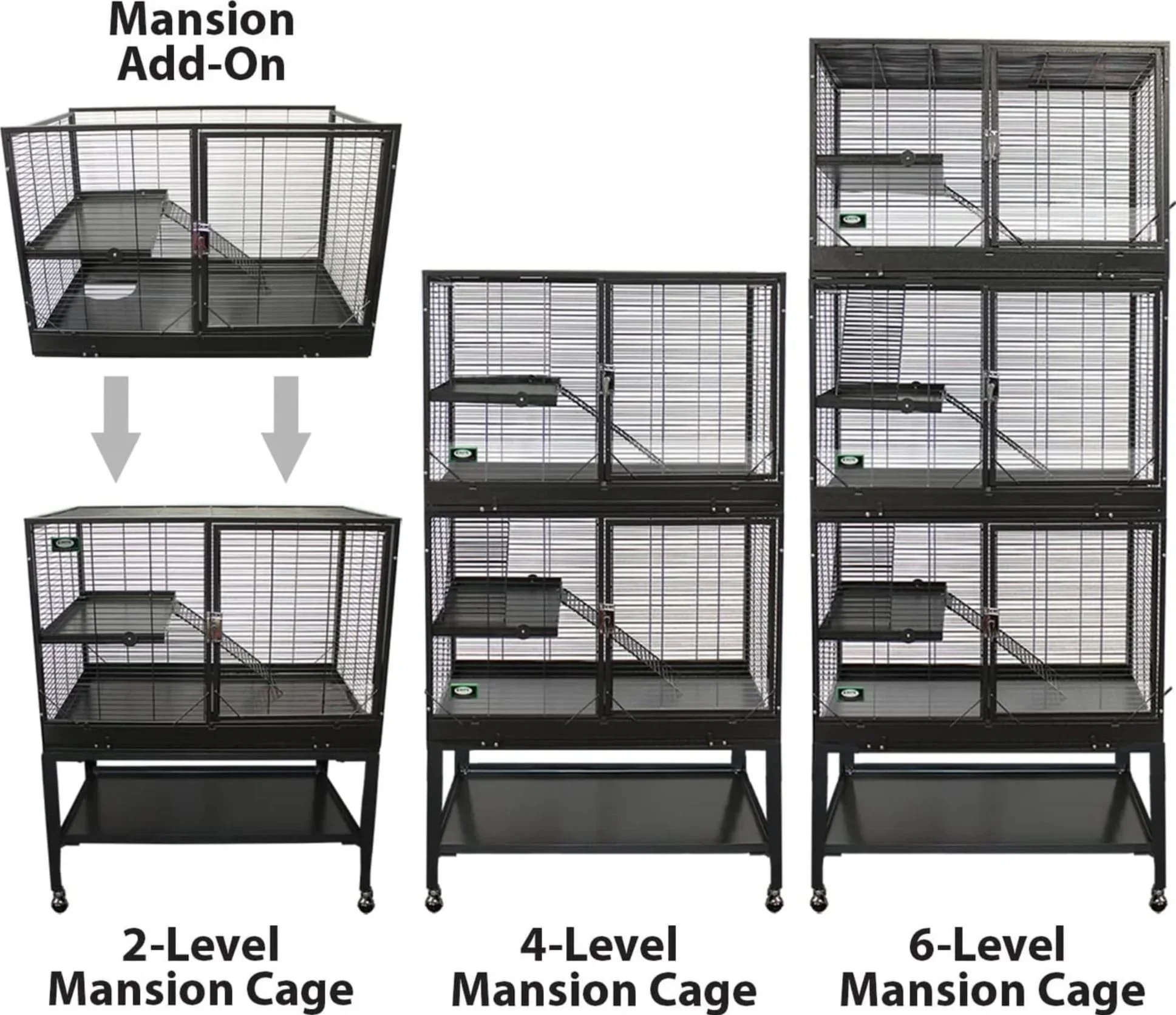
Another strong cage option, similar to the Midwest cages, is Exotic Nutrition’s Mansion. This enclosure shares many design features with Ferret Nation and Critter Nation cages but is typically more affordable, usually priced between $200–$300.
The Mansion design is modular and can be expanded over time. One major advantage is that it is ready to use straight out of the box—the shelves and floor pans are all metal, so no modifications or replacements are required.
The primary downside is access. Only one side of the cage opens, while the other side is fixed, which slightly limits accessibility for cleaning and interaction. This is not a deal breaker, but it is worth considering. Additionally, the Mansion is somewhat smaller than the Midwest design. The EN Mansion measures 22″ deep, 22.5″ tall, and 32″ long, compared to a Midwest cage at approximately 25″ deep, 25″ tall, and 36″ long.
While the size difference may not sound significant, floor space is especially important for chinchillas, and the reduced dimensions do matter. For this reason, we do not recommend housing more than two adult chinchillas in the Mansion. Even with this limitation, it remains a solid option and one we still use and recommend.
A more affordable option is PetSmart’s Full Cheeks™ Chew Proof Small Pet Habitat. This cage is ready to use right out of the box, as it is fully metal and does not require any modifications.
The enclosure measures 20″ deep, 30″ wide, and 30″ tall, with a total height of 46″ when including the stand. It is suitable for one to two chinchillas and is typically priced under $200, making it a budget-friendly option for owners who want a durable, chew-proof cage without additional setup costs.
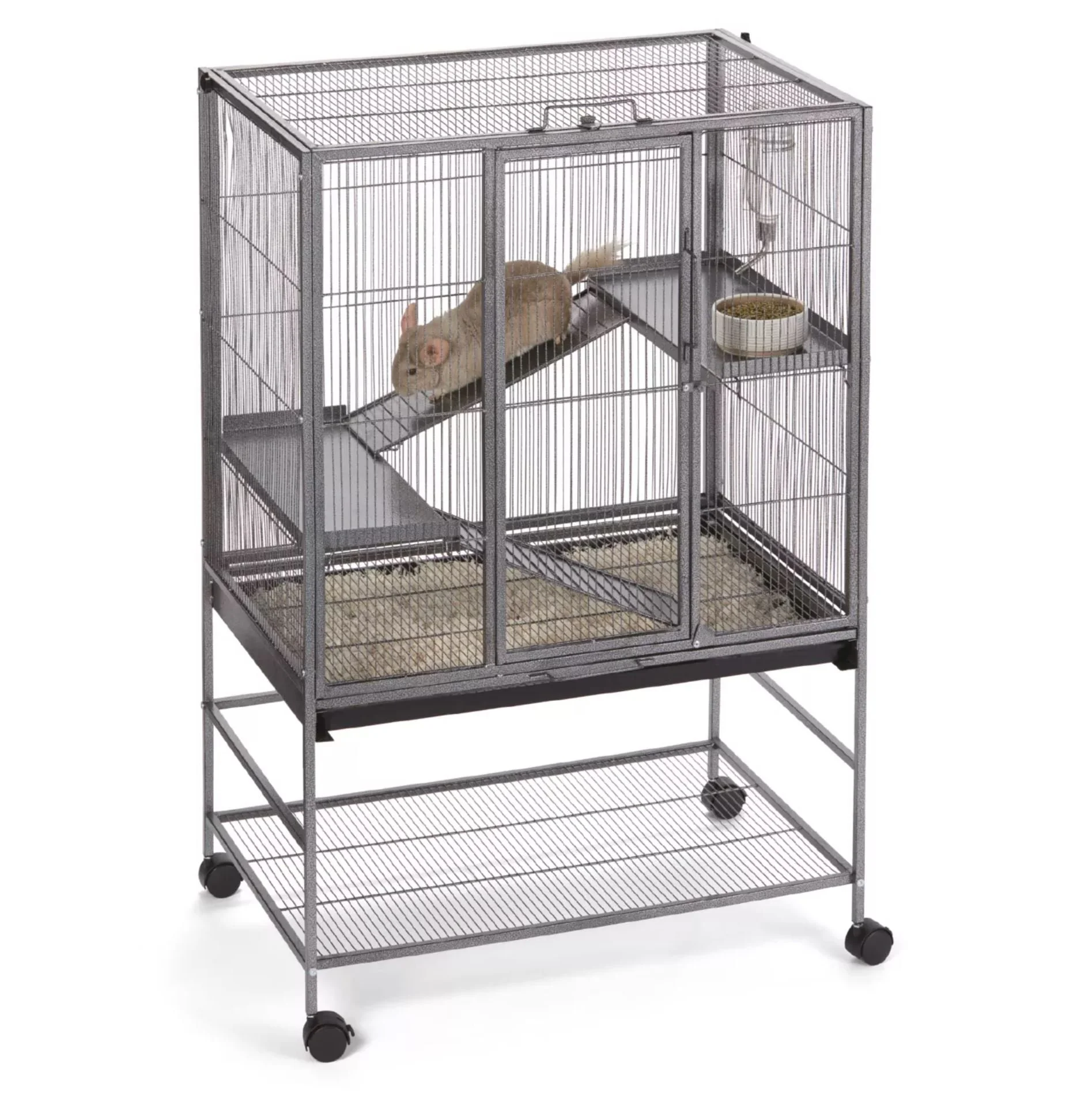
There are dozens of cages on the market that can be suitable for chinchillas, but even more that are not. Our audience is primarily newer owners who may need clearer guidance. No matter which enclosure you choose, it must meet minimum size guidelines: 25″ × 25″ × 25″ for one chinchilla, 25″ × 25″ × 36″ for two, and increase the size as you add additional animals.
When selecting a cage, width should be prioritized over height. Platforms should be wide and solid to prevent injuries from falls, and ledges should be spaced closely together for easy access. While chinchillas enjoy hopping up inclines, they are poor climbers and cannot catch themselves if they slip or fall.
A proper chinchilla cage must also be sturdy and chew-proof, meaning it should be constructed from strong metal. Unfortunately, many cheaply manufactured cages are entering the market that rely on plastic connectors, plastic latches, or wooden structures similar to rabbit hutches. These designs are unsafe and often lead to escapes, injuries, or serious harm.
Our goal is to help owners make informed choices before wasting money on unsuitable cages and, more importantly, before putting their chinchillas at risk.
It's important to note that the information provided on this website is not a substitute for professional veterinary advice. While we strive to offer comprehensive guidance, our content is intended solely for educational purposes. If your chinchilla requires medical attention, we strongly urge you to seek assistance from a qualified veterinarian. Brands, Photos from listings, links, etc, are used solely for educational purposes. To request removal, contact us at chinnieboutique@gmail.com